💧 01
The turquoise pool
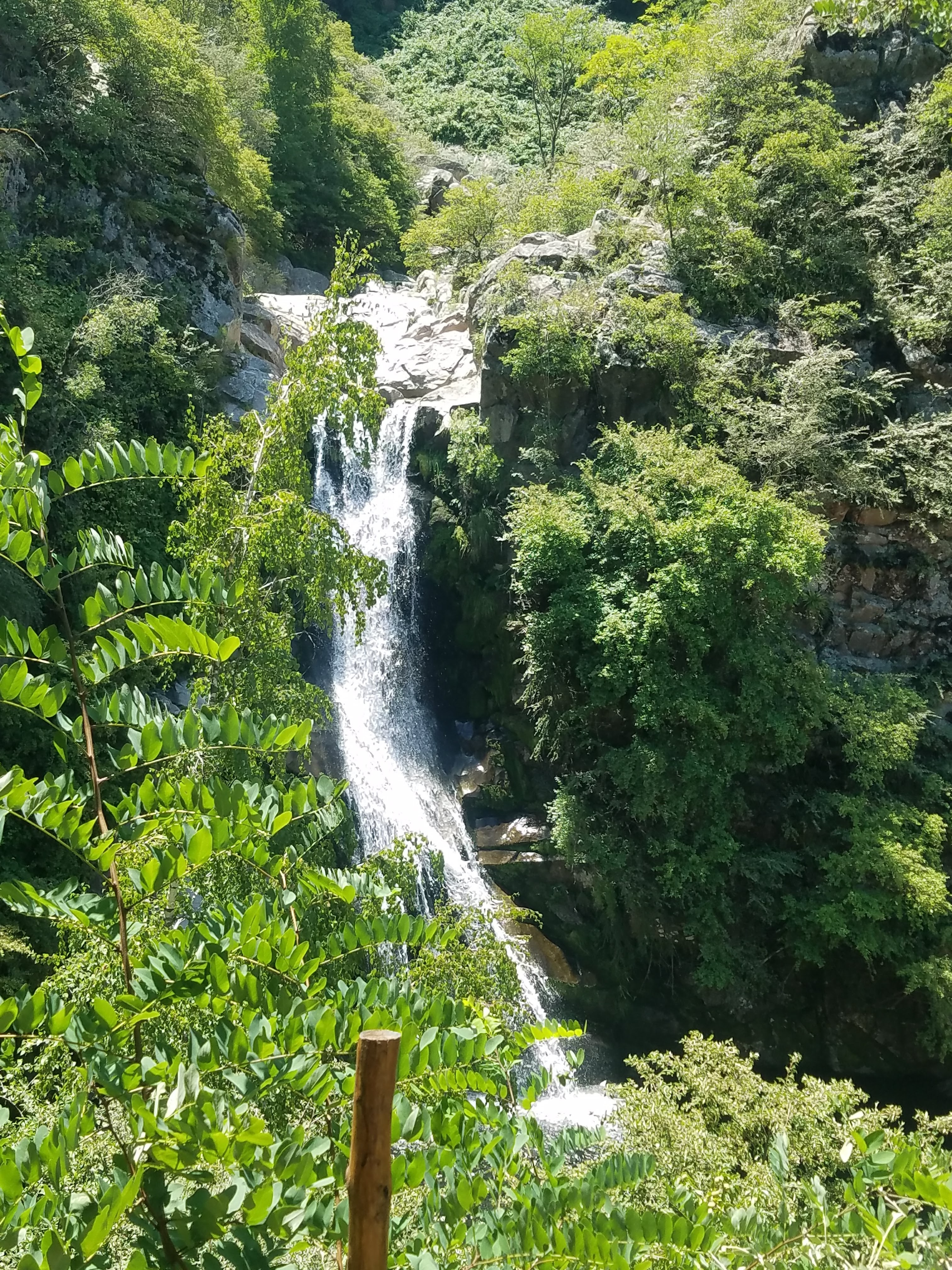
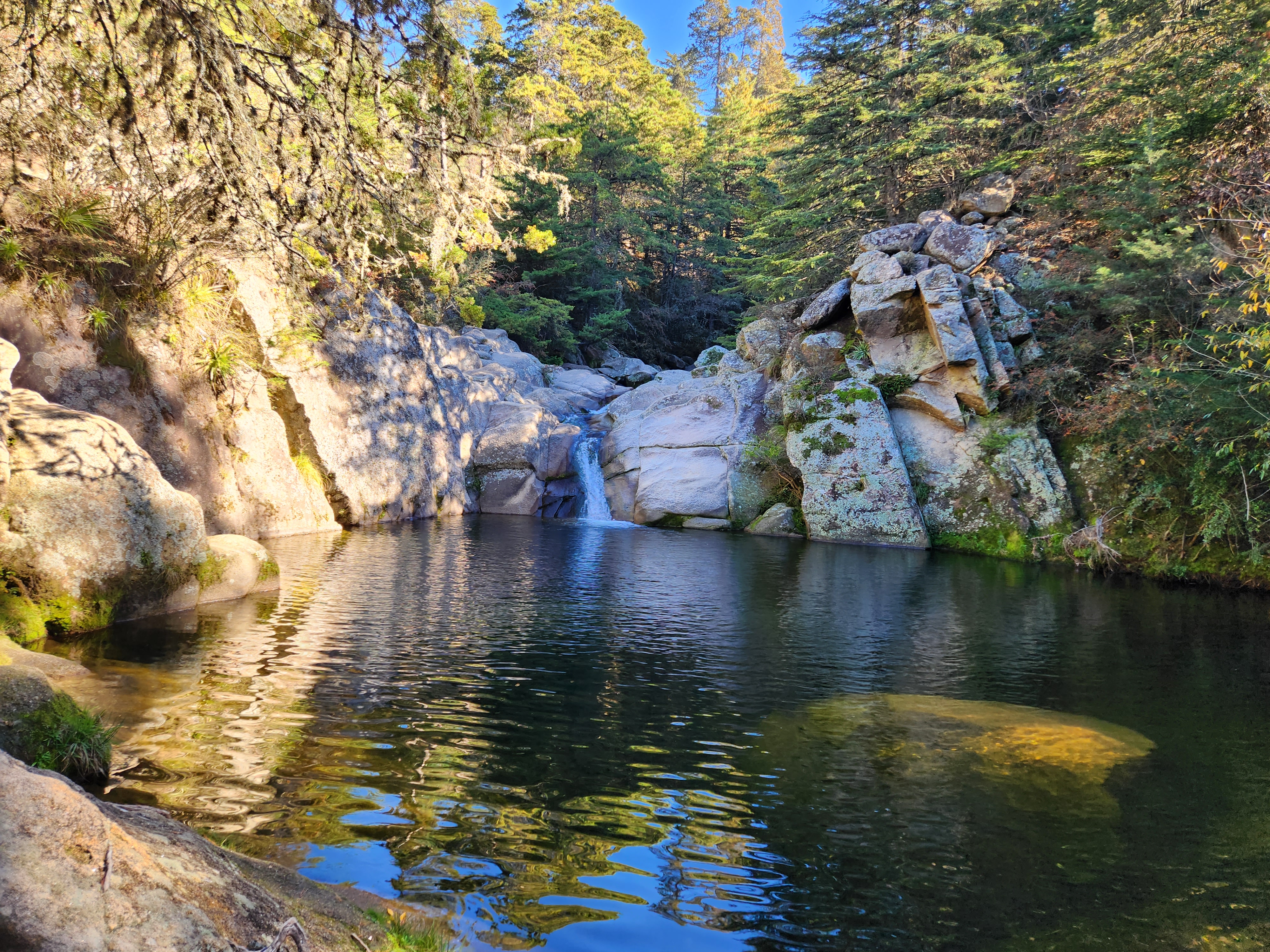
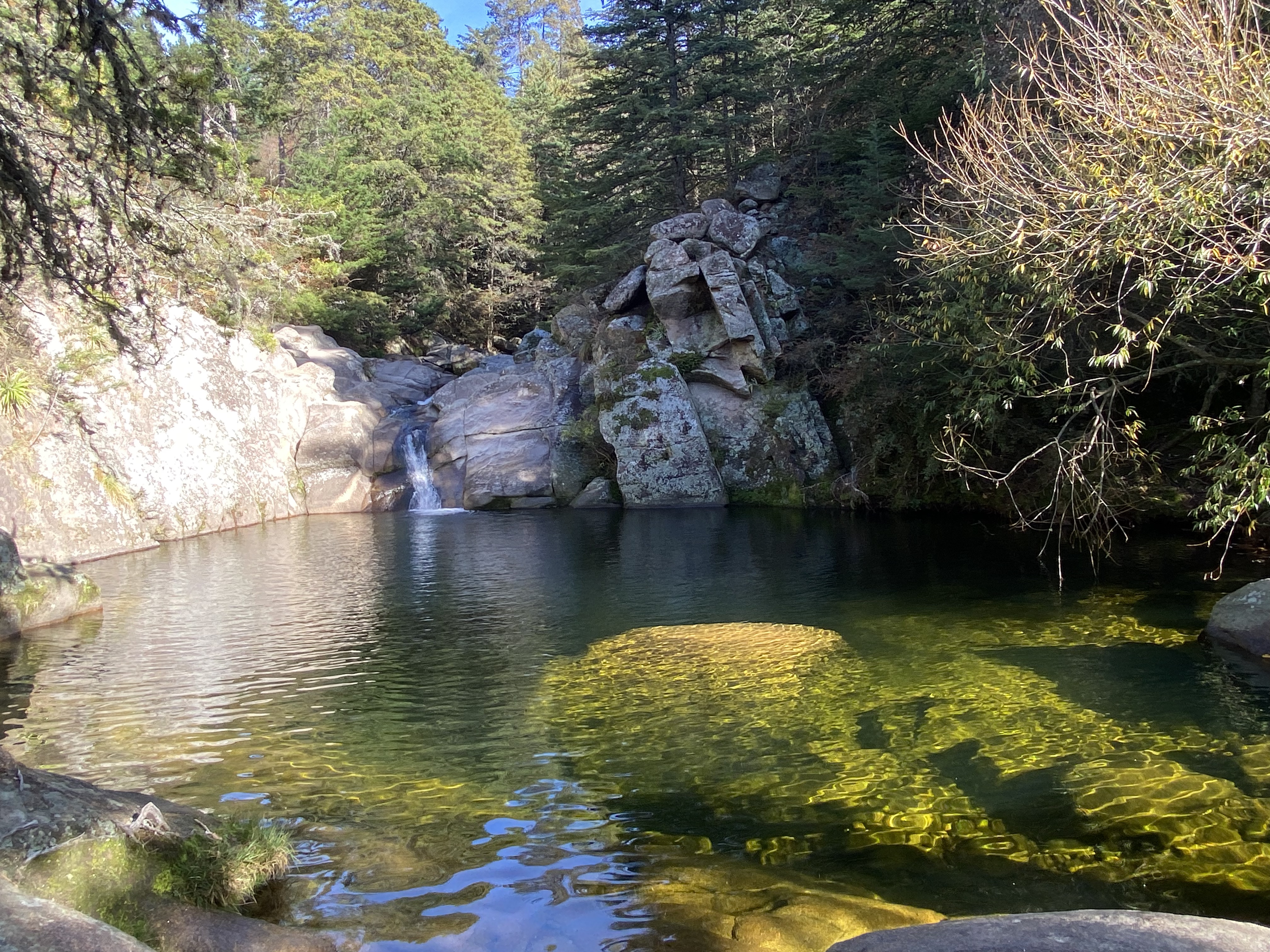
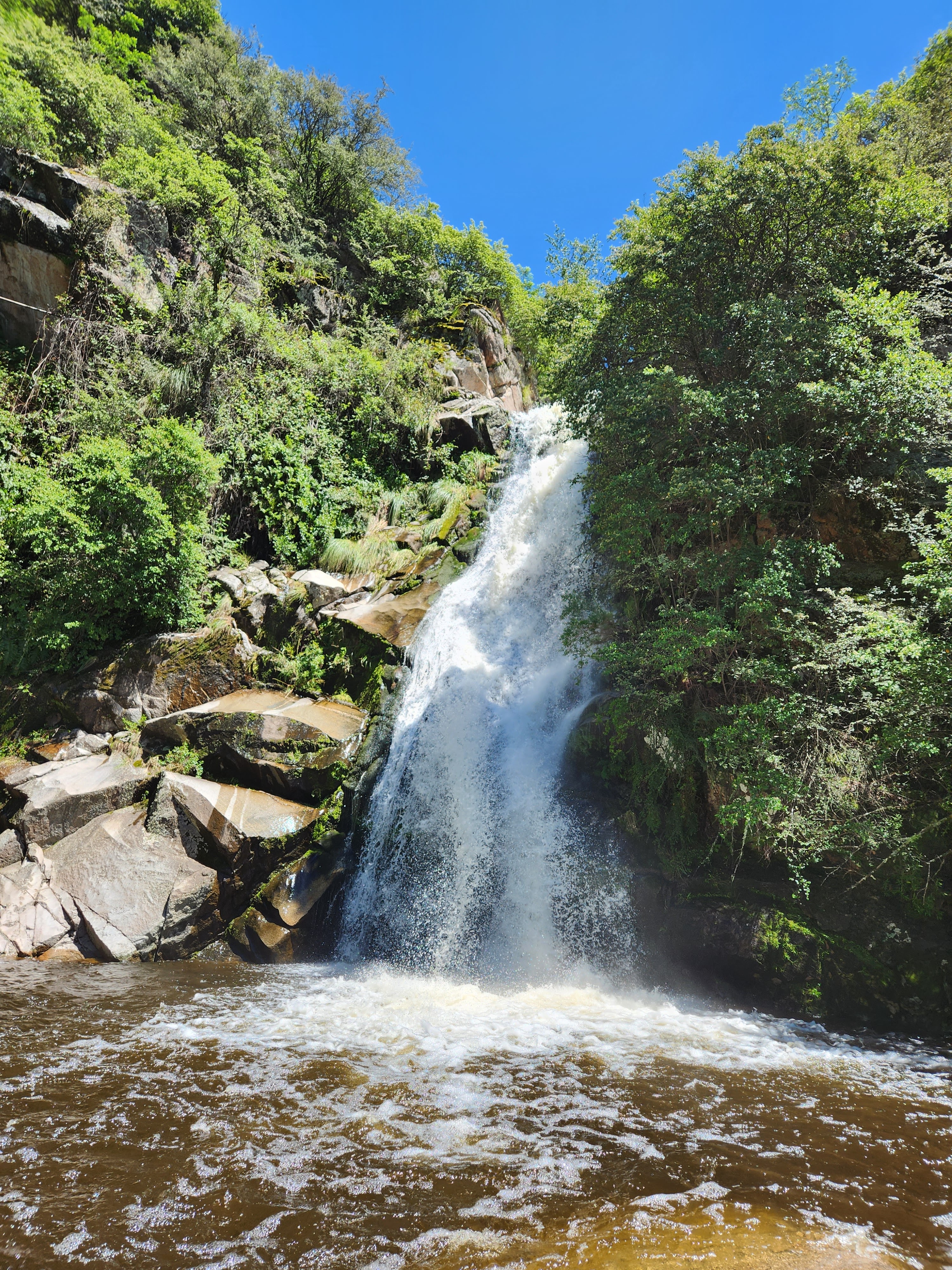
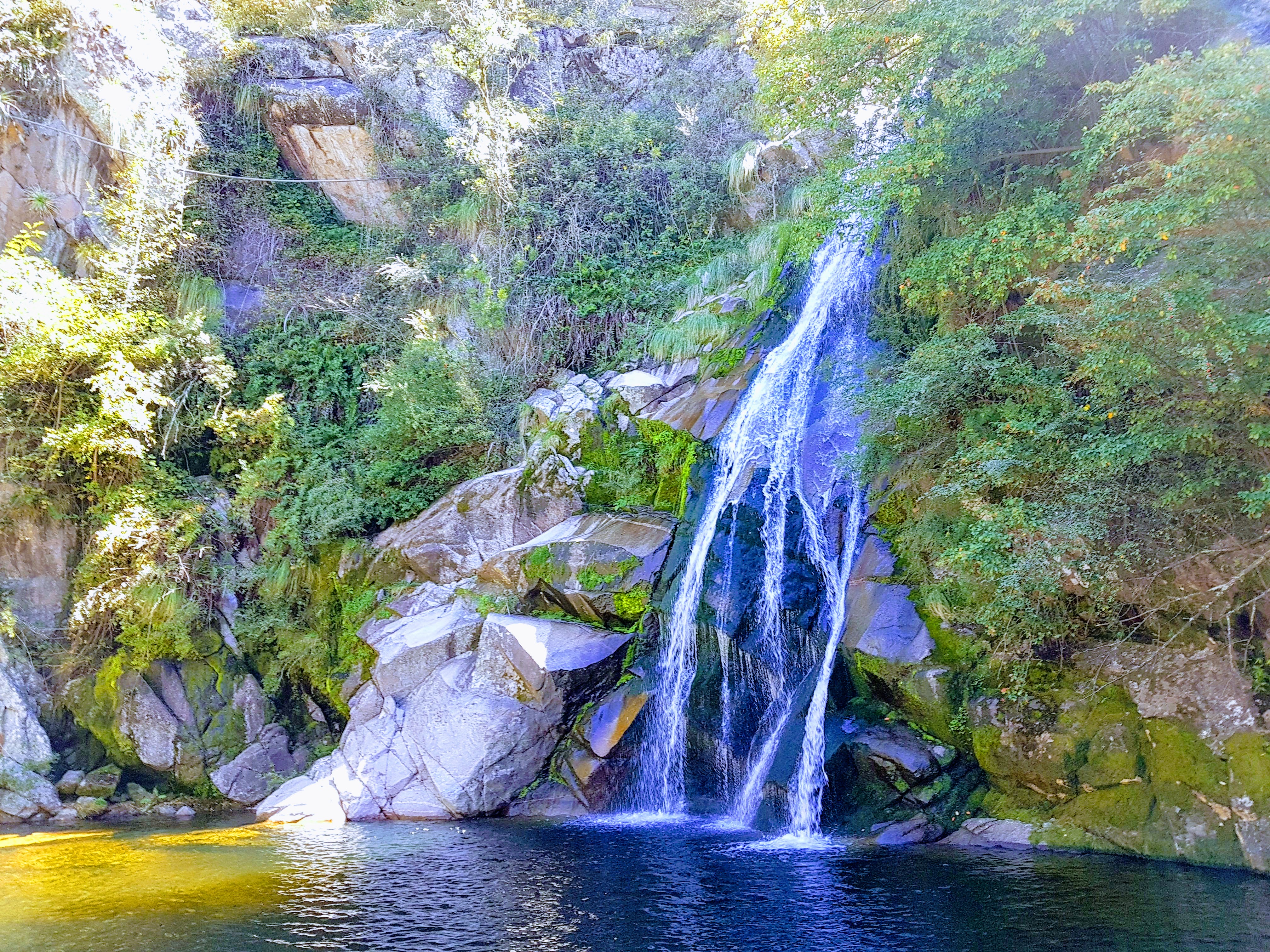
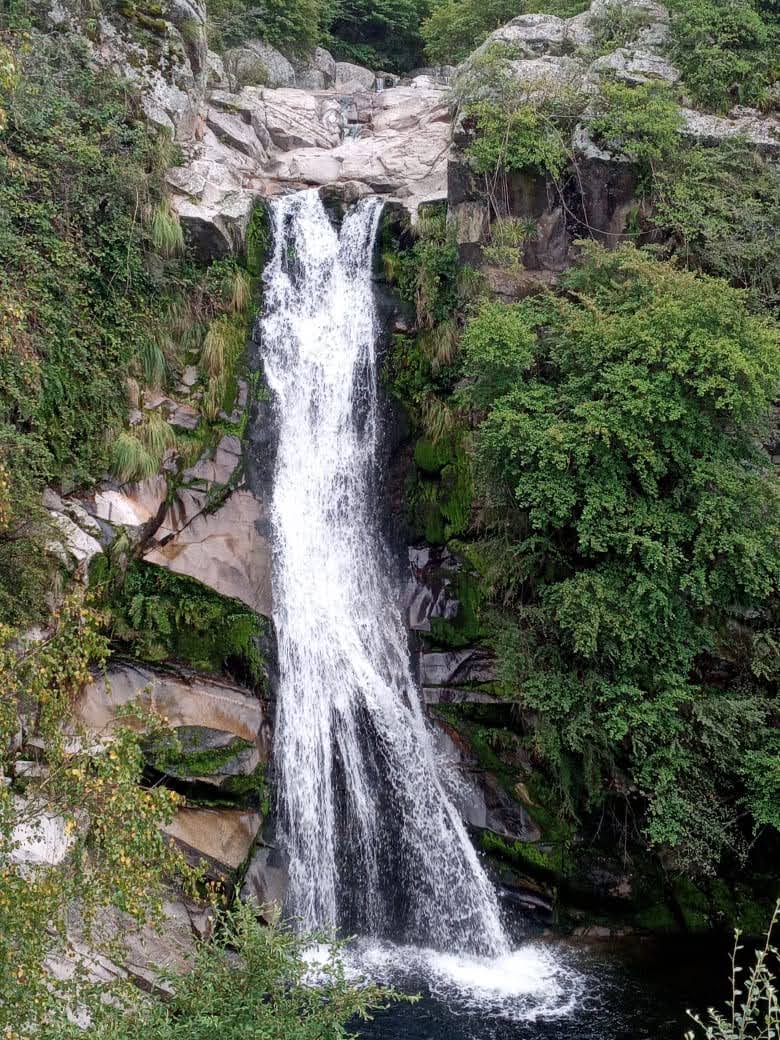
A waterfall carved the granite for millions of years into a near-perfect circular pool about 6 m deep, with water so clear it glows emerald green between the rocks.
One still pool.
Half a valley's echo.
The pedestrian village, streams and waterfalls, German food, camping and trails — a full guide that catches the broad "La Cumbrecita" searches.
To every traveller who walks into Calamuchita
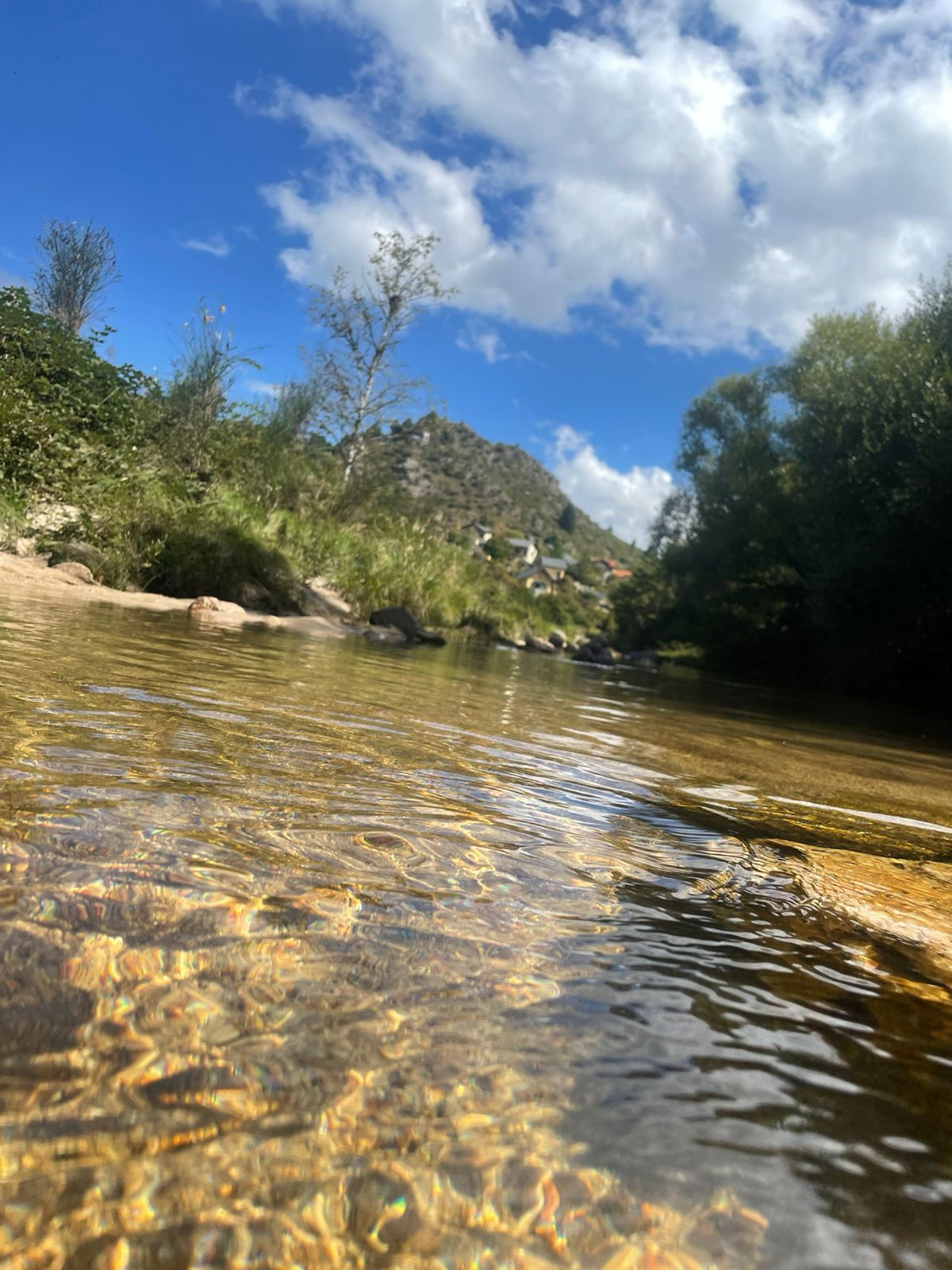
Welcome to La Olla. In the Calamuchita Valley of Córdoba, Argentina, beside the car-free pedestrian town of La Cumbrecita, a waterfall spent millions of years hollowing a hard granite boulder into a turquoise natural pool about 6 m deep. There is no ticket and no fence — only water, rock and wind.
There are no rides, no noise — only the roar of the falls dropping into the pothole, the green light refracting off the rock, and the laughter of those who leap into the cool water in summer. At dawn the valley often wears a thin mist; at noon the sun makes the surface crystalline; after rain the waterfall swells to its most moving few minutes.
As an independent travel and nature guide, we built this site not only to tell you how to reach the pool, but to invite you to arrive as a guardian rather than a mere visitor. When you stand on the rock shaped by water for millions of years, you become both a witness to this valley and a co-keeper of its future.
Take a photo of the shimmering water. Leave the rock as you found it.
Let this valley pool stay clear for every summer.
A waterfall carved the granite for millions of years into a near-perfect circular pool about 6 m deep, with water so clear it glows emerald green between the rocks.
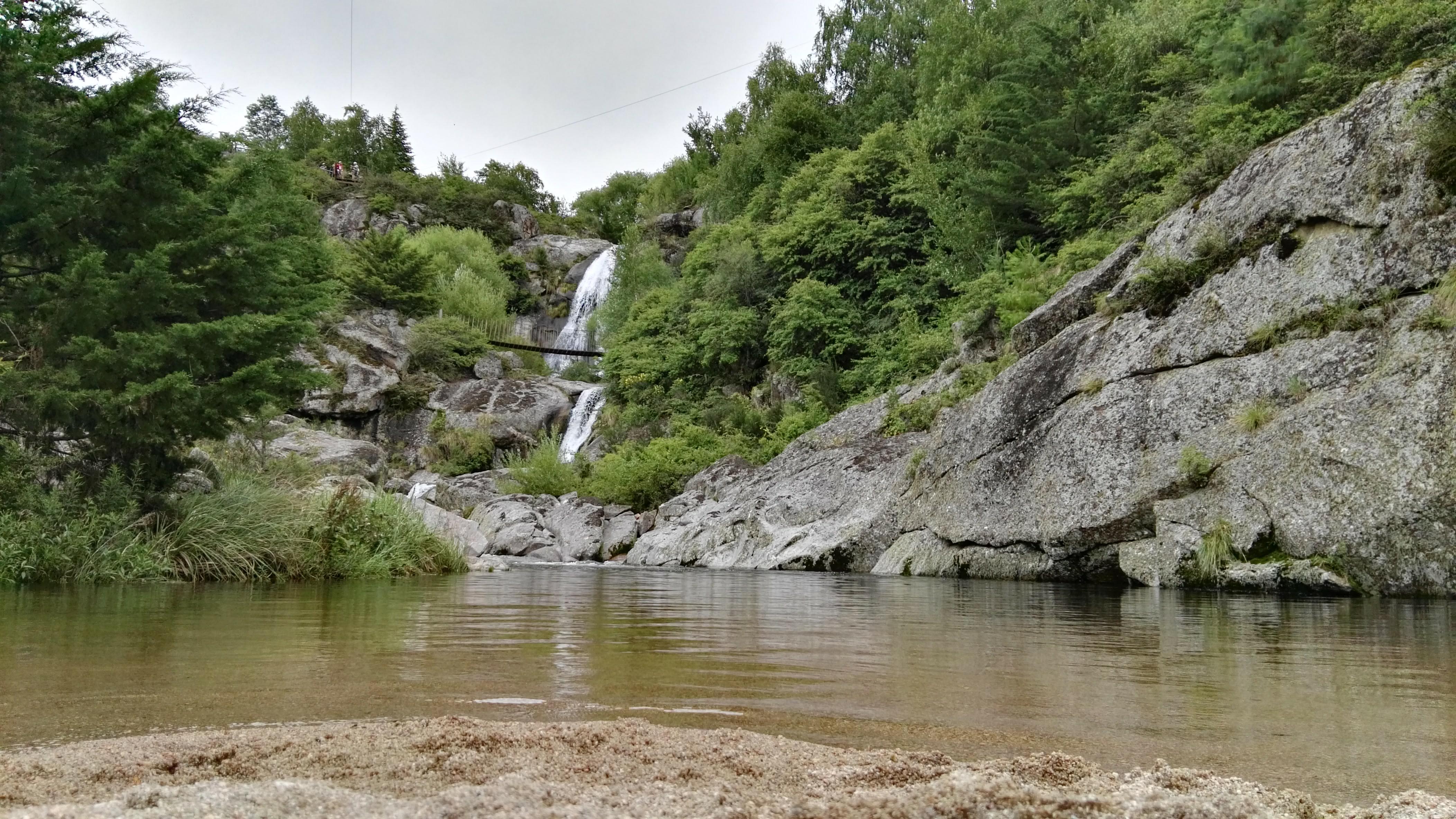
A stream plunges from above, polishing this "pot-shaped" pothole (marmita) year after year. The flow changes with the seasons and is most spectacular after rain — the most moving passage of the trail.
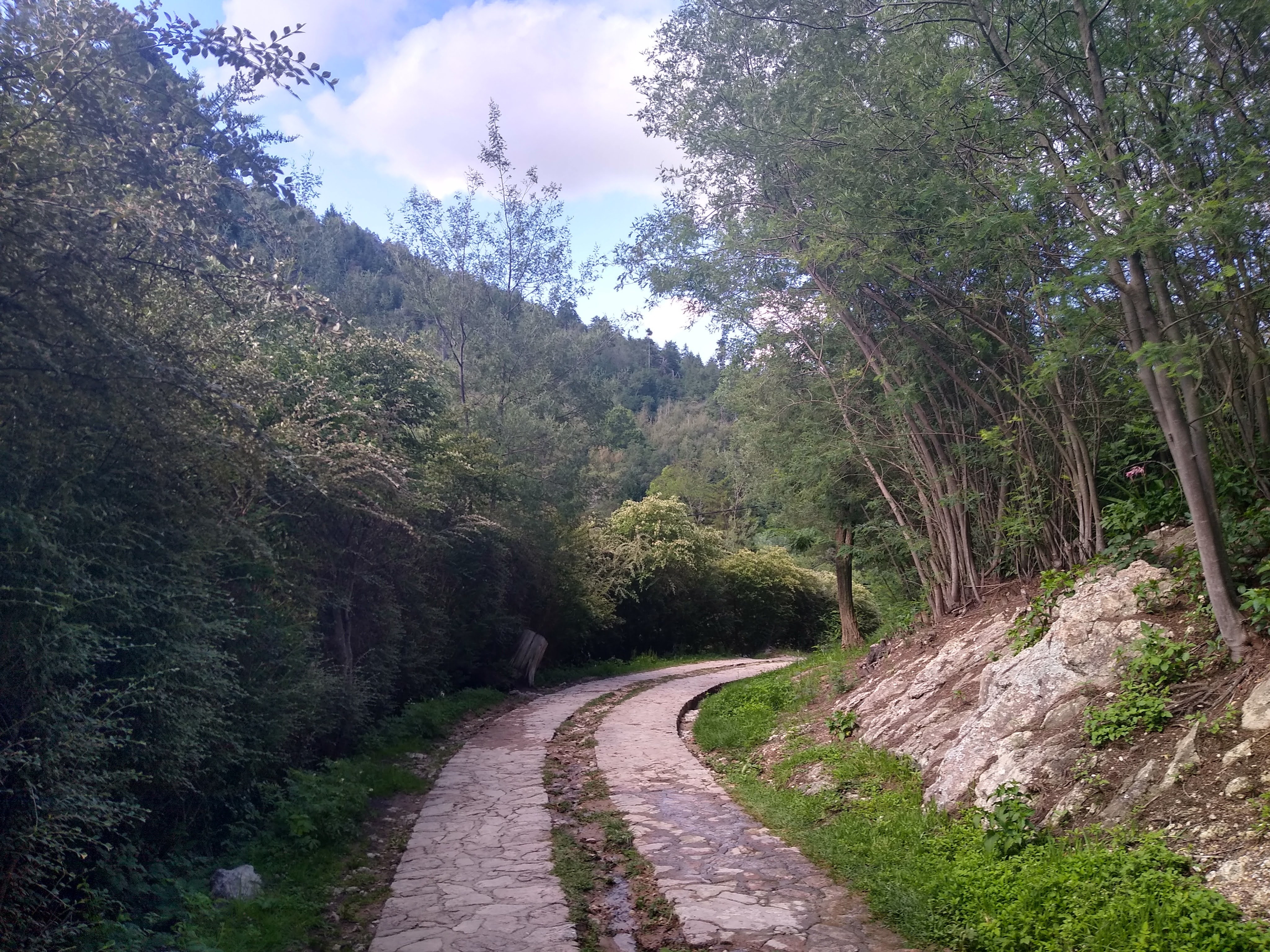
From the pedestrian town of La Cumbrecita, a signed trail reaches the pool in about 1–2 hours; in summer you can leap into the cool water — one of Córdoba families' favourite places to beat the heat.
The trail and pool area have no mobile coverage — load your map in town first and tell family your plan.
The trail has dirt paths and stone steps to climb — not suitable for wheelchairs or strollers; bring a baby carrier for infants.
Spring and summer (Oct–Mar) bring full water and swimming — the best time to visit. In winter the water is cold and the trail slippery, though still hikeable. Go in daylight and return before dark.
La Olla is a free natural area with no booth or gate — you simply walk in. Please treat it as a landscape we all share.
The round-trip walk from La Cumbrecita centre is about 1–2 hours; add swimming, photos and rest and a half-day is comfortable. Pair it with the town and nearby trails for a full day.
Calamuchita is known for distinct seasons and afternoon showers. Data below is fetched live from the public Open-Meteo API to help you plan and shoot.
Drag the time to feel why the Golden Hour peaks around sunset. This is an illustrative curve (sun-angle approximation), not a measurement.
La Olla sits beside La Cumbrecita in the Calamuchita Valley of Córdoba, about 130 km from the provincial capital Córdoba. From the city it is usually a 2-hour drive; on arrival you park outside the car-free pedestrian town and walk in, then follow the signed trail to the pool.
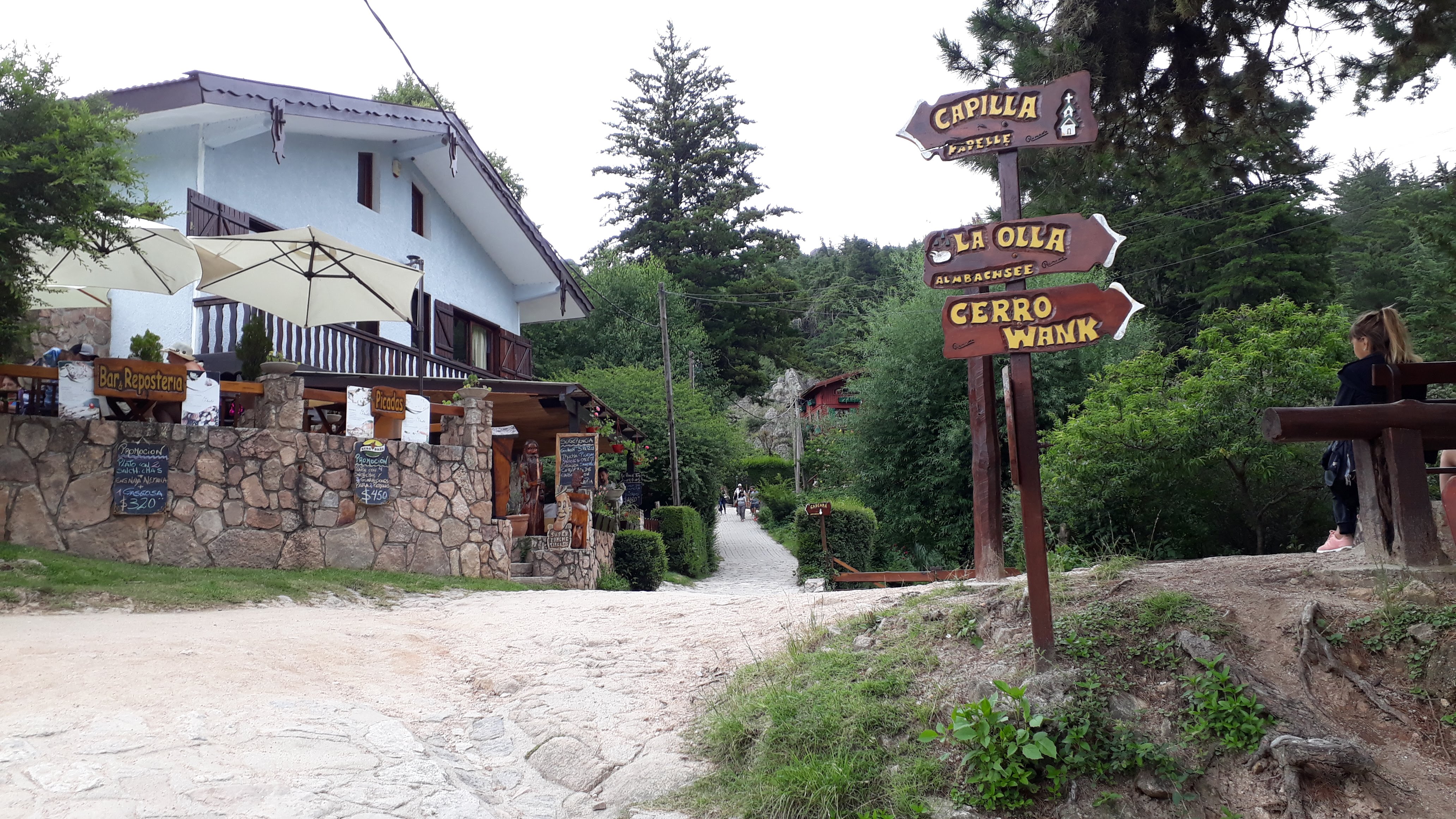
La Cumbrecita is a car-free pedestrian town. After parking outside, follow the main street and the clearly signed trail for about 1–2 hours to La Olla; the stream and forest along the way make the walk a soothing journey in itself.
From the pothole polished by a waterfall over millennia, to La Cumbrecita's pedestrian tradition, to the Comechingón people who watched over the valley — behind this green pool lie key natural and human memories of Calamuchita.
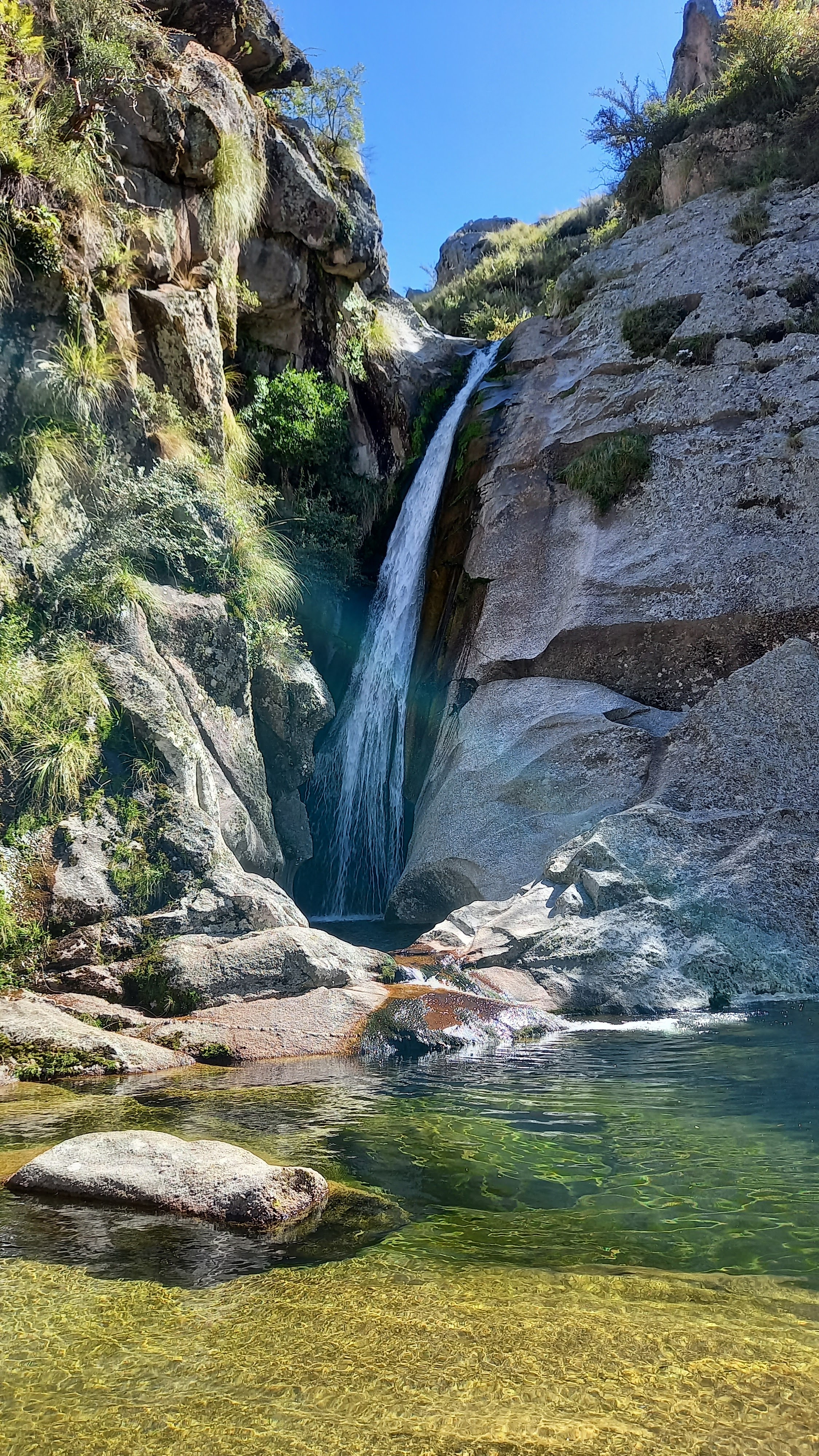
La Olla is not a dam but a classic "pothole" (marmita). As the stream drops from above, the sand and pebbles it carries spin and grind against the rock at high speed, gradually hollowing a near-circular pit about 6 m deep in the hard granite, which the water then fills.
Strictly, a pothole is the result of a flowing whirlpool carrying gravel that "abrades" the bedrock, which is why La Olla's walls are so smooth and deep and take on a natural emerald hue.
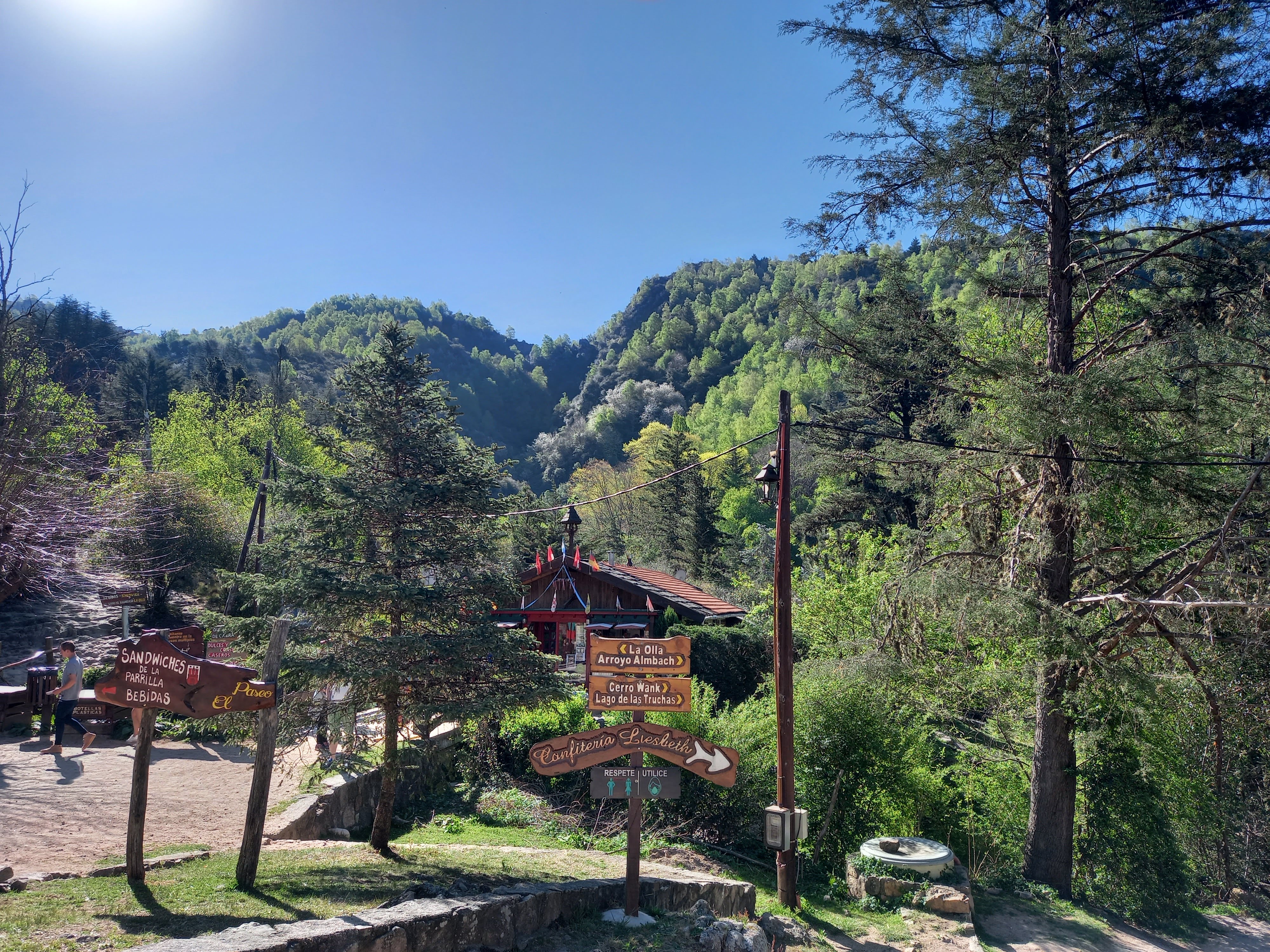
La Cumbrecita lies in the Calamuchita Valley, in the southern Sierras de Córdoba. The hills are mostly ancient metamorphic rock and granite, shaped over eons of weathering and stream incision into rolling, stream-cut terrain.
Between subtropical and temperate influences, the valley has distinct seasons: summer afternoon showers, cool winters. Abundant rain feeds many streams — the very basis for natural pools like La Olla. The Sierras de Córdoba, part of the "Sierras Pampeanas", are a key window into the breakup of Gondwana.
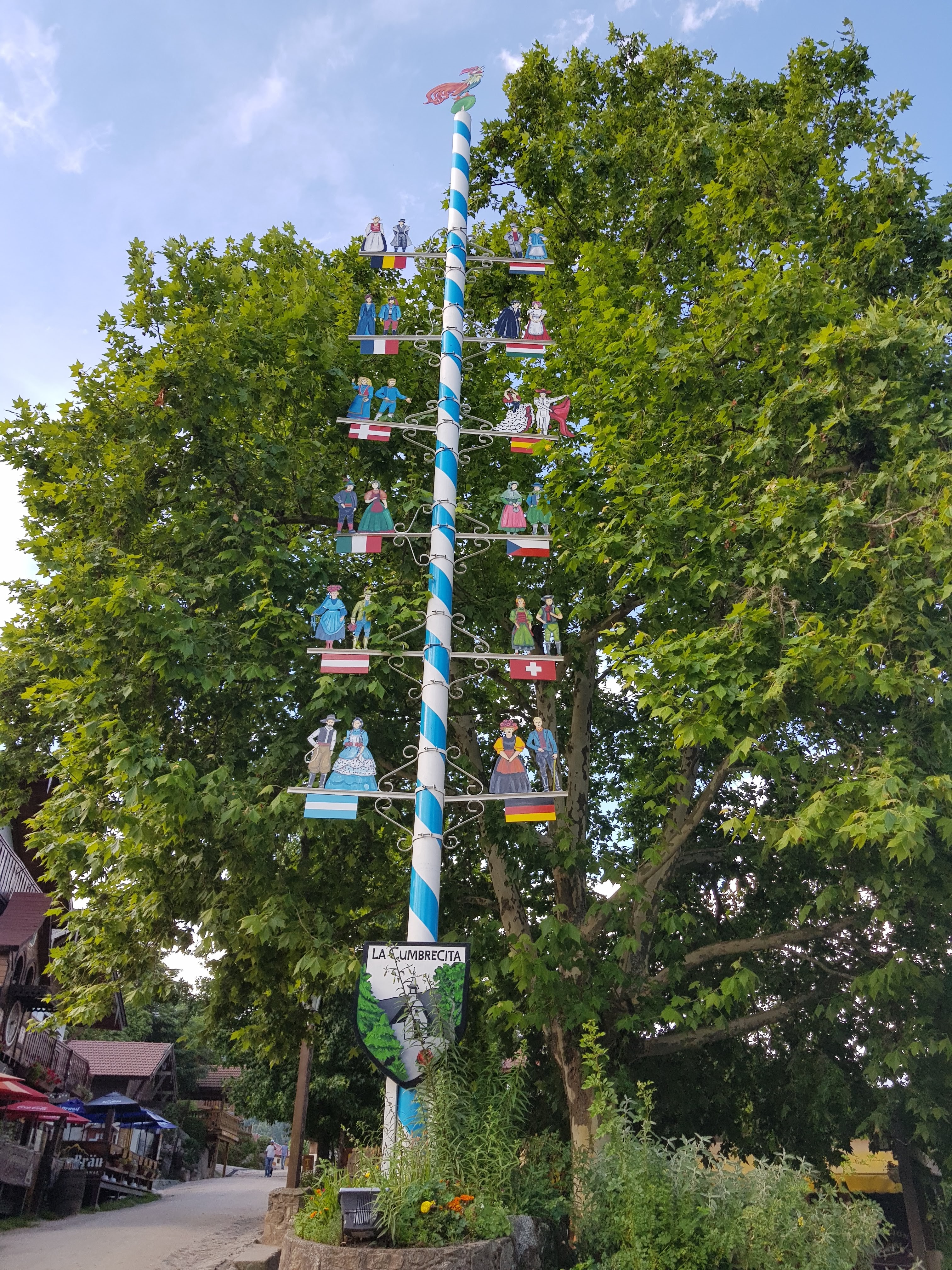
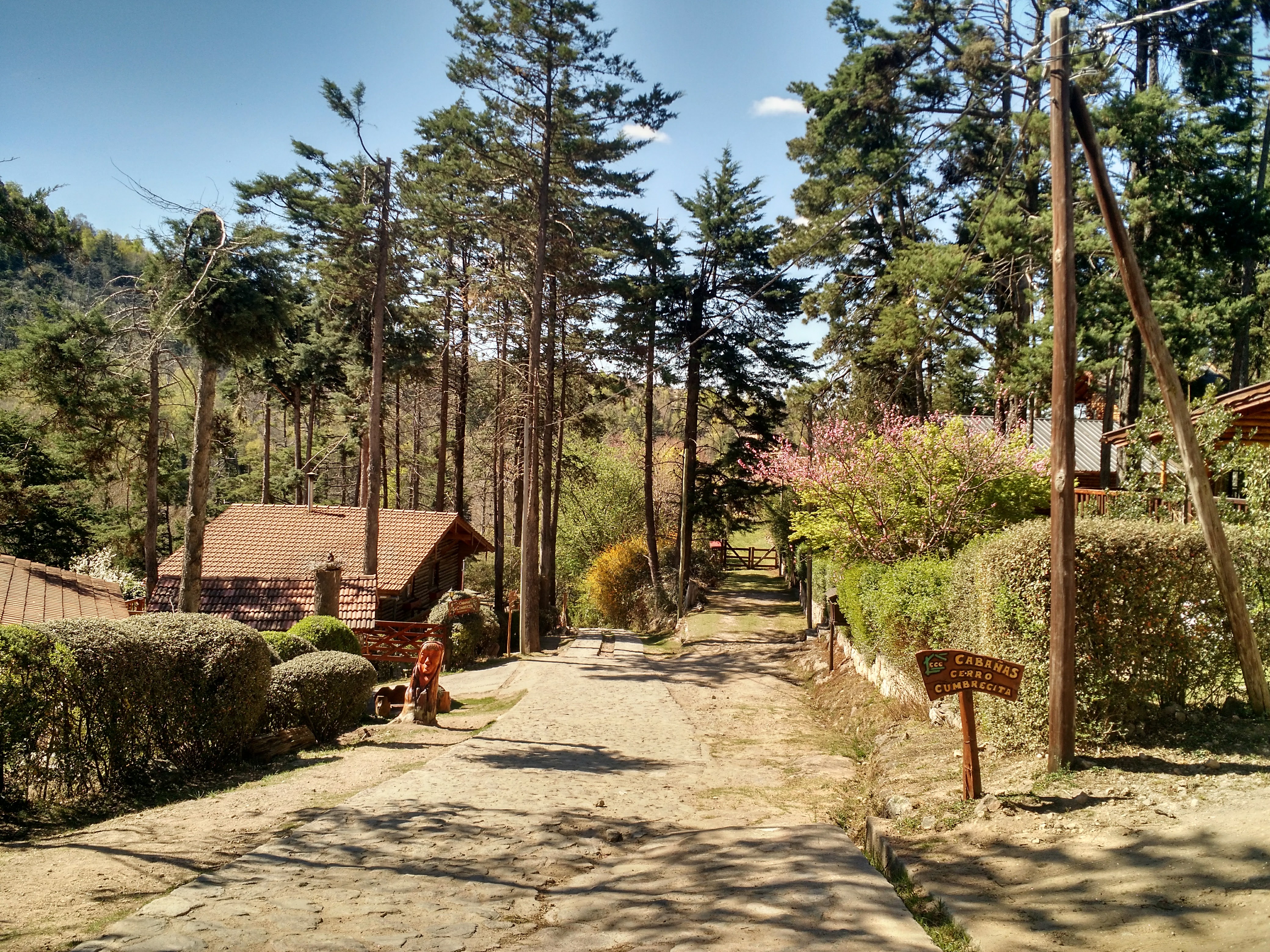
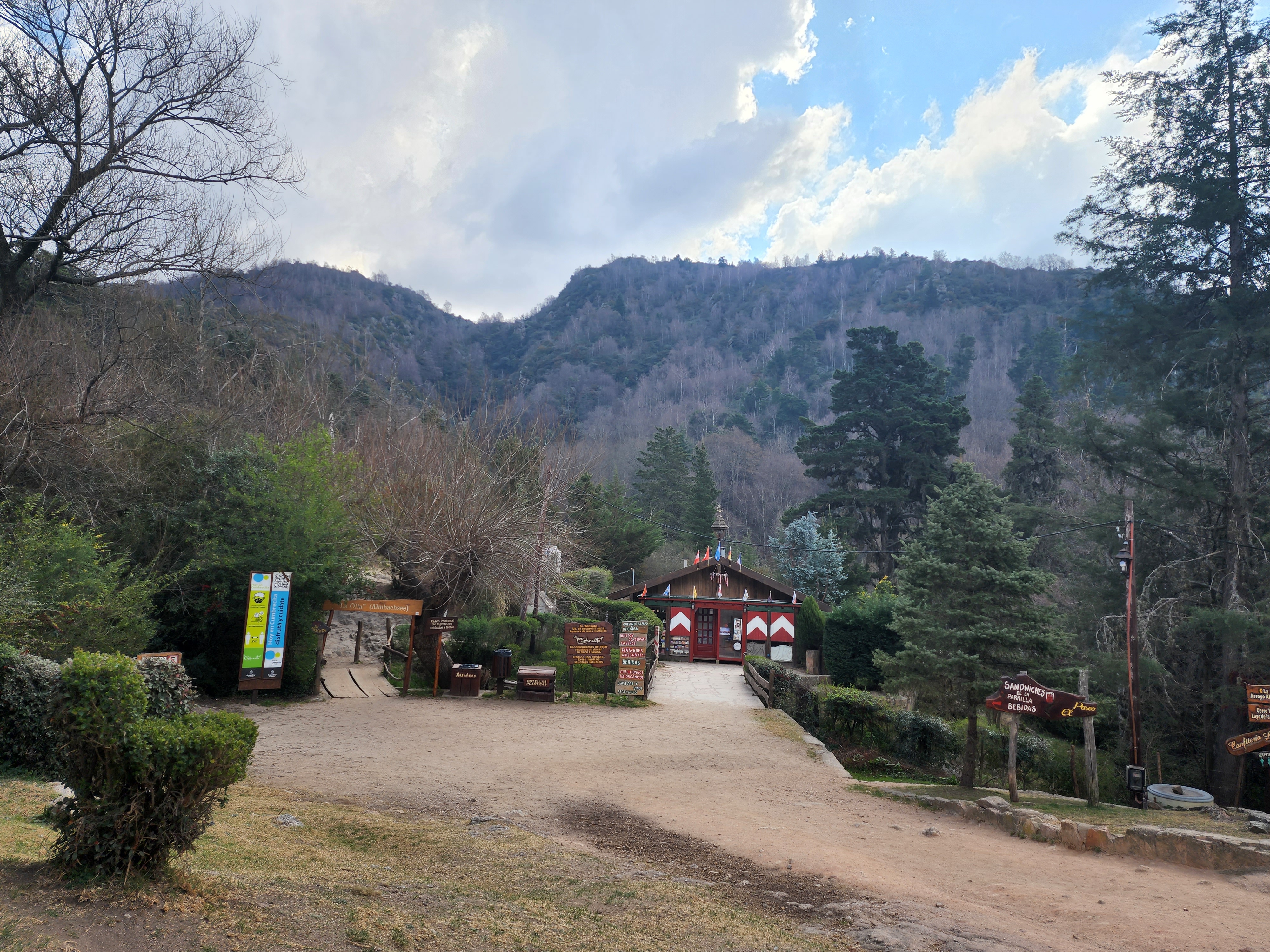
La Cumbrecita ("the little summit") is a car-free pedestrian town. In the mid-20th century, German- and Swiss-origin settlers from Central Europe built Alpine-style buildings by the hills and streams, paving the main street with granite.
To preserve the tranquil mountain mood, cars are still banned in town; visitors park outside and walk in. This "pedestrian town" model is rare in Argentina, making La Cumbrecita one of Calamuchita's most recognisable travel signatures.
Long before European settlers, the Comechingón lived for generations among the stream valleys of the Córdoba Sierras, hunting, gathering and practising simple farming, and leaving many abstract geometric rock paintings on the cliffs.
They saw mountains, streams and water as living, spiritual presences to be used with restraint. Today, archaeological sites and rock-art spots of the Comechingón still dot the valley — a key to the oldest memory of this land.
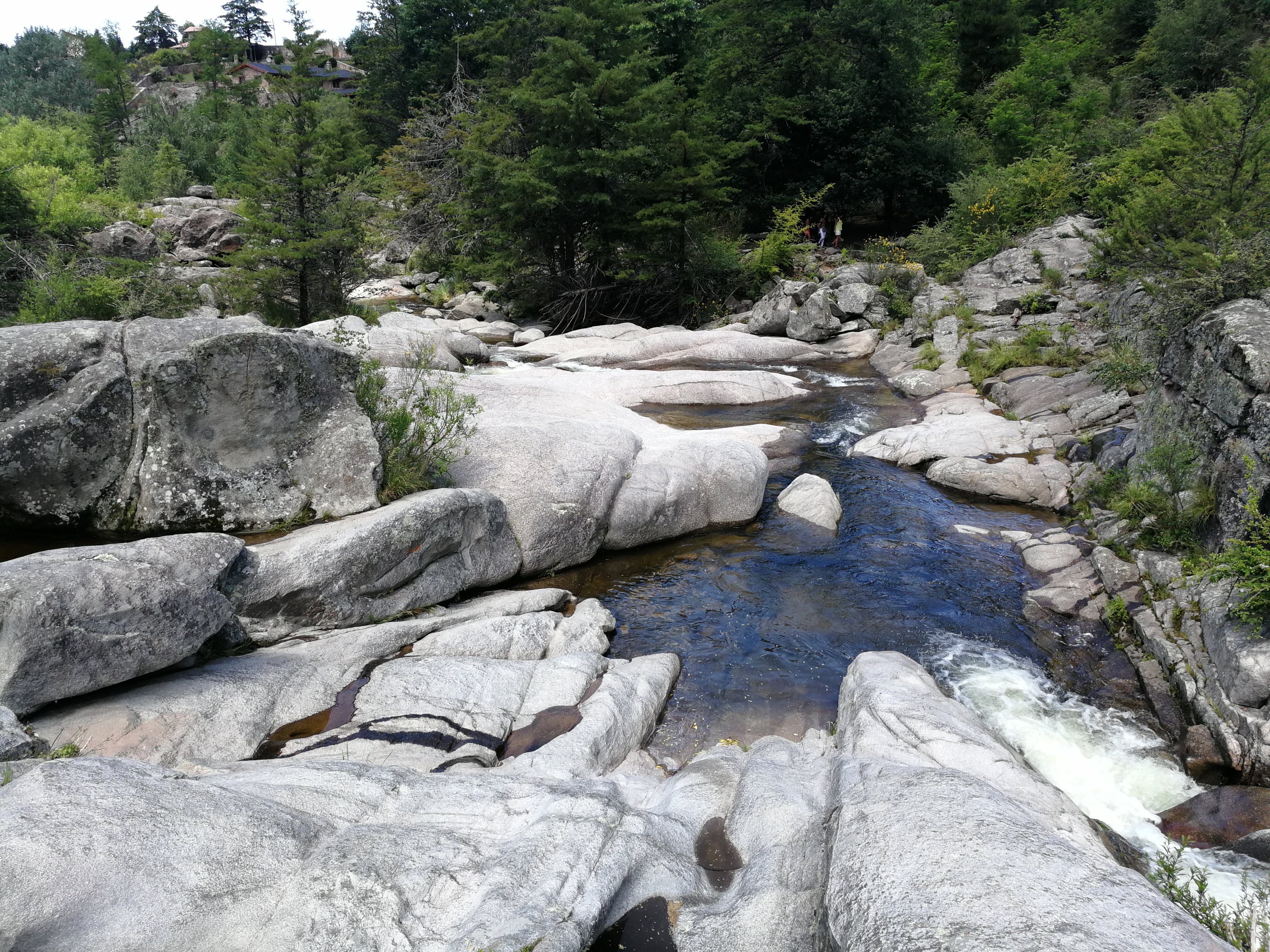
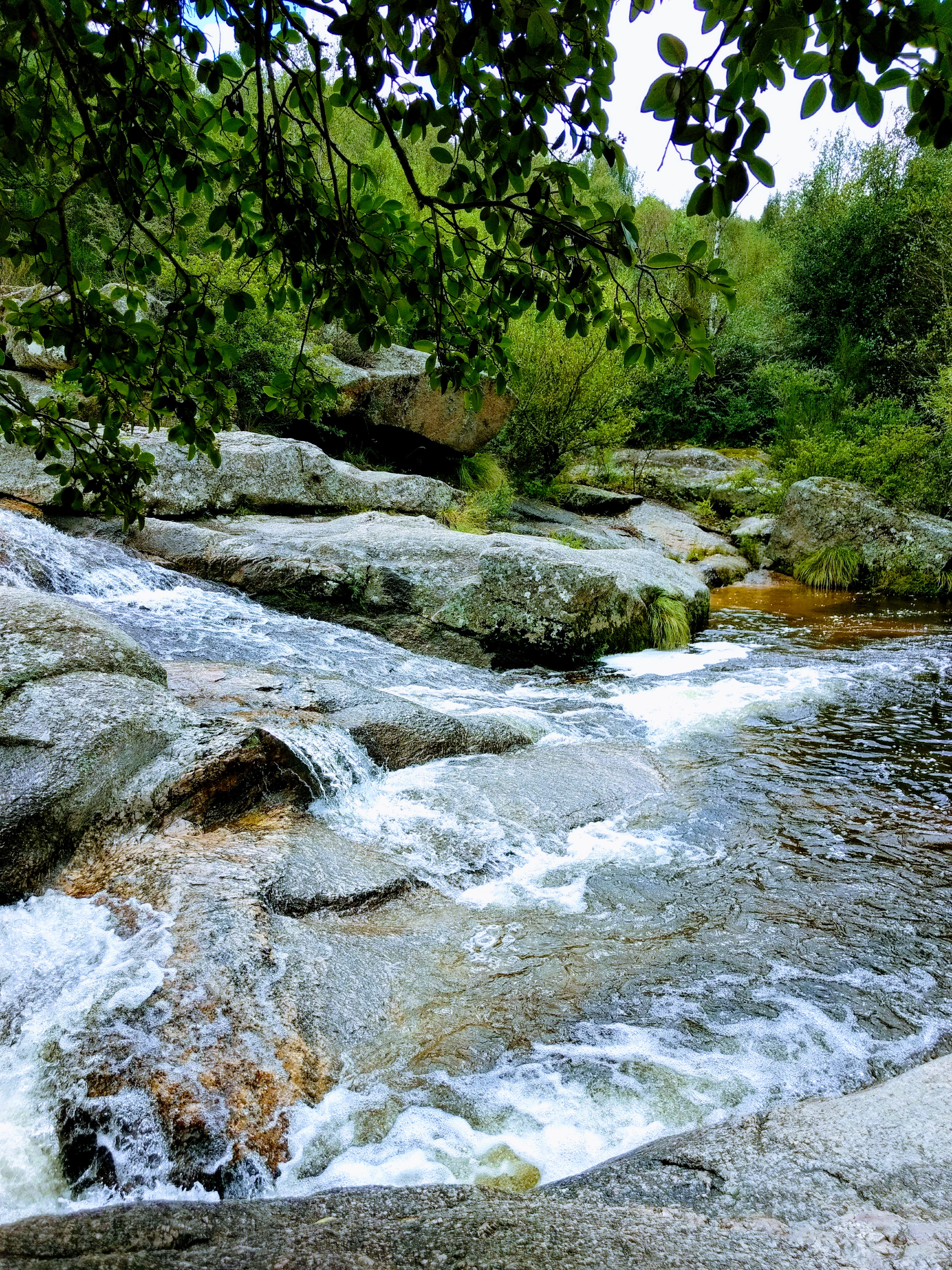
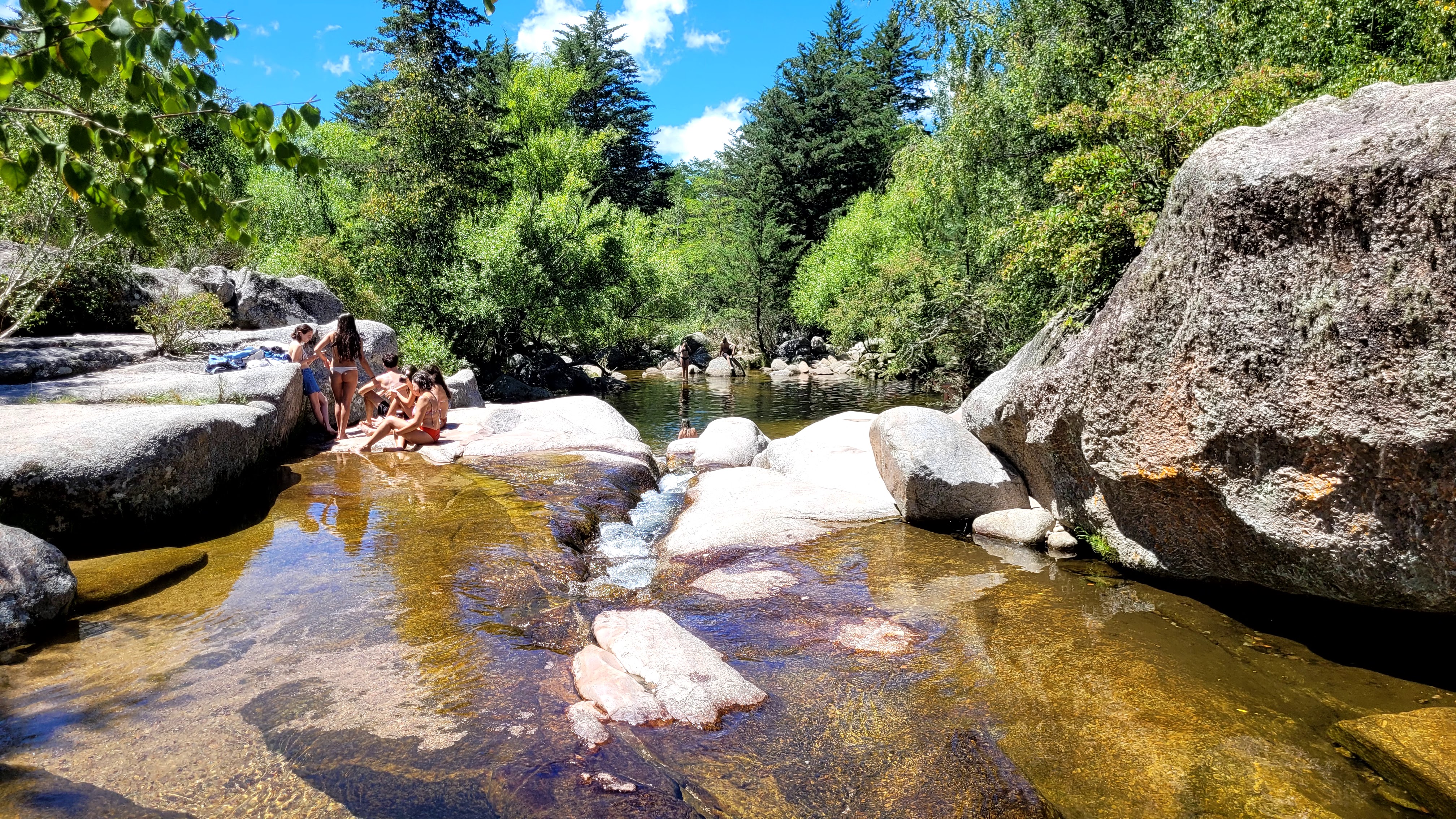
What carved La Olla and La Cumbrecita is Arroyo Almbach, together with the nearby Río del Medio. Rain gathers in the gullies of the Sierras, meanders down through native forest and meadows, and finally fills this green pool.
Because the water comes from unpolluted hills, the pool stays clear year-round. Protecting the upstream source forest (bosque de relictos) from logging and grazing is the most fundamental step in keeping La Olla's water clean and plentiful.
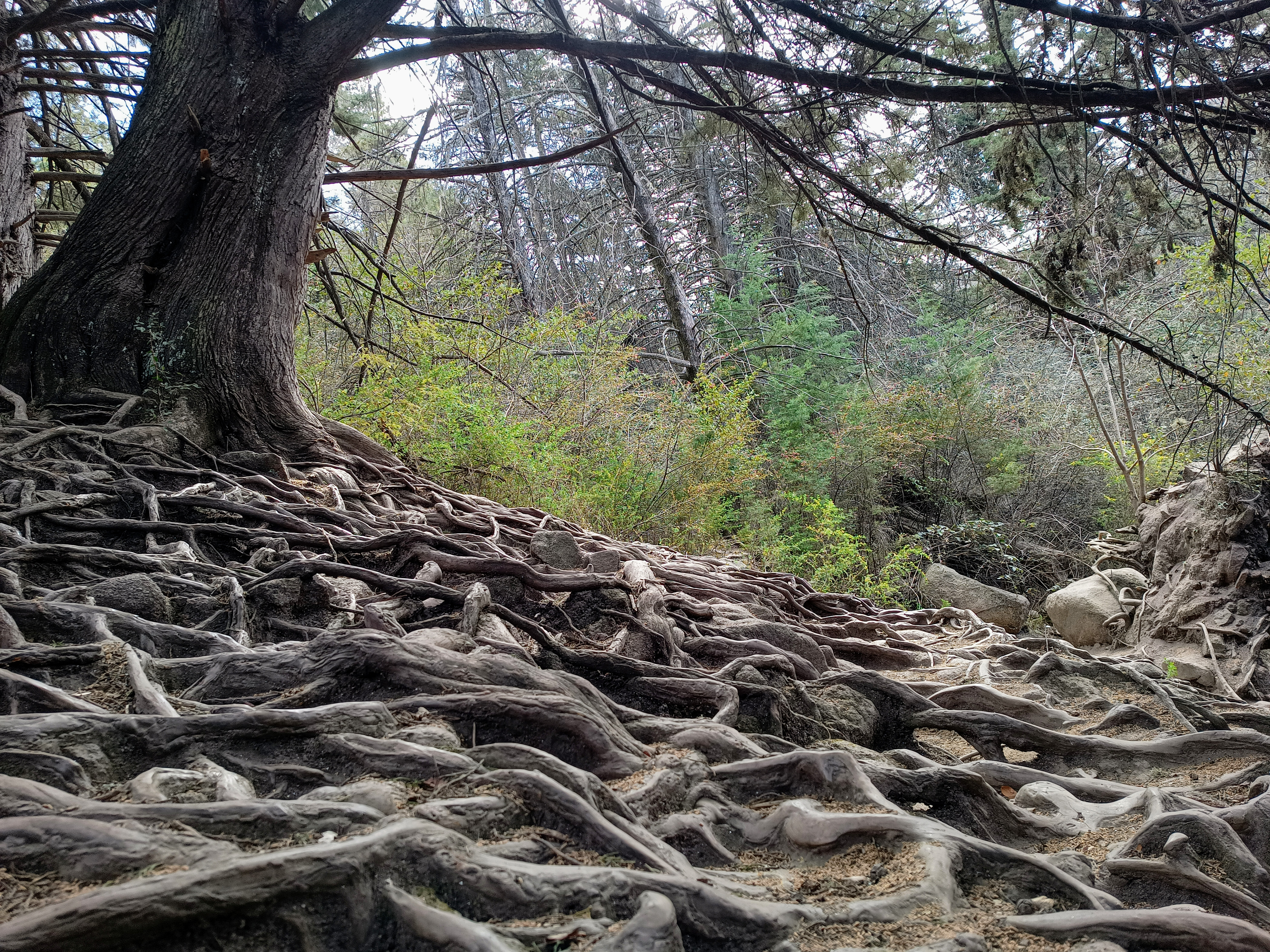
Around La Olla grows the "Sierras" vegetation band of the Córdoba Sierras. Valley floors are home to tall Horco Molle (Aphananthe) and fragrant Pepper Tree (Molle); the mountain meadows are dotted with Calamuchita's emblematic bottle tree (Palo Borracho) and giant Cardón cactus.
These plants are extremely sensitive to soil and altitude, making them living indicators of the local microclimate. The "relict" forest of native species shelters many birds and animals and is key to sustaining La Olla's water.
Notably, the town of La Cumbrecita itself is wrapped in a planted Central-European conifer forest (pine, fir, oak, birch) — seeded by its German founder Dr. Helmut Cabjolsky in the 1930s, interweaving oddly with the native Horco Molle into a singular "Alpine forest".
Though a tourist town, La Cumbrecita sits between the native forest and streams of the Córdoba Sierras; even more special, the Central-European conifer forest (pine, fir, oak, birch) introduced in the 1930s by its German founder Dr. Helmut Cabjolsky wraps the pedestrian town in an "Alpine forest" that strangely overlaps the native Horco Molle. From the vizcacha peeking from the rocks to the benteveo singing at the forest edge and the emblematic bottle tree and cactus, this landscape is a web of highland life. Slow down — your meeting with these mountain dwellers often lasts but a single gust of wind.
Lagidium viscacia
A rabbit-like rodent with a squirrel-like tail, living on rocky slopes and cliffs where it hops between crevices to escape predators. A flagship species of the Sierras' rock ecology.
Cavia aperea
The wild relative of the guinea pig — small, nimble and common in streamside meadows and forest edges. Wary and curious, but never feed them; human food harms their health.
Pitangus sulphuratus
One of the commonest, noisiest songbirds of the Córdoba hills, with a tuft of yellow on its head and a bright call. It often perches by the trail — the hiker's familiar "guide bird".
Aphananthe tenuiflora
A native tree of the Calamuchita valleys — spreading, broad-canopied and shady, home to many birds and animals. Moisture-loving and fond of stream banks, it is a living marker of the local water courses.
Echinopsis candicans
The emblematic tall cactus of the Córdoba Sierras, opening large white flowers at night. Extremely drought-tolerant and fond of sunny slopes — among the most photogenic plants of the hills.
Chorisia speciosa
Landmark treeA deciduous tree with a bottle-shaped, spiny trunk and satin-pink flowers in late spring. Often planted in La Cumbrecita's yards and roadsides, it is the town's most recognisable botanical symbol.
The most distinctive ecological wonder of La Cumbrecita is not natural but "made". In the 1930s its German founder Dr. Helmut Cabjolsky planted thousands of Central-European trees — pine, fir, oak and birch — on the barren rocky slopes. Over decades these saplings from the northern Alps grew into dense forest, tinting the grey rock hills shades of green and creating an "alpine microclimate" rare in Argentina.
Here you see a curious overlap: the native Horco Molle stands next to the introduced conifers, pine scent mixing with the damp breath of the native forest. This is not only a botany lesson but the very core of the pedestrian town's human history — one man who spent a lifetime turning bare rock into an "Alps". Though not native, this planted forest has become a new habitat layer for local birds and small mammals; its leaf litter also feeds the hydrology of the streams and La Olla.
Didn't expect such an emerald pool next to a pedestrian town. In summer the plunge is bracingly cold and the falls echo off the rock — worth the whole hike.
Walked over from La Cumbrecita with the kids — the trail is clear and easy. They loved playing in the pool; just keep a close eye, the rock is slippery.
Came just after a shower — the flow was astonishing and the pothole roared. Photos look great from every angle; a hidden gem of Calamuchita.
Views are perfect, but the rock by the pool was far slippier than I expected — nearly fell. Wear water shoes and don't linger at the edge.
Came without a car! Took the valley bus to La Cumbrecita, walked into town and on to the trail. Cheap fare and the town is as peaceful as a hideaway.
Arrived early on purpose — mist still hanging, the surface still as a jade stone. The most unforgettable ten minutes of the trip.
Summer weekends get crowded and the pool edge fills up. A weekday or an early arrival makes a big difference.
No booth, no kiosk — just water and rock. This "purely natural" pool is the most relaxing exactly because of that. Let's keep it clean together.
An Alpine-style car-free town with granite-paved streets and a stream running through it. Restaurants, lodges and craft shops line the centre — the starting point and base for La Olla.
The ecotourism heart of southern Córdoba, where rolling Sierras, streams and German-immigrant towns intertwine. Drive or cycle through it for fresh mountain air at every turn.
A German-heritage town famous for its Oktoberfest, about 20 minutes from La Cumbrecita. Worth a stop for craft beer, sausages and Black Forest cake.
The highest peak of the Córdoba Sierras (~2,884 m); the summit overlooks the whole Calamuchita Valley. A good advanced hike for experienced walkers after La Olla.
What carved La Olla and La Cumbrecita is Arroyo Almbach, together with the nearby Río del Medio. The streams gather from the Córdoba Sierras and cut this green pool, also running through the town. The Río Yacanto lies on the other side of the valley and is unrelated to this site.
As a free natural public landscape in the Calamuchita Valley, La Olla belongs to every traveller and to the visitors who come after. Please read and commit to the code below so this green pool stays clear for all.
There are no bins at the pool. Carry out all waste (peels, tissues, bottles). Plastic swept away by the stream harms fish and the downstream ecosystem.
Córdoba summers are dry and the hills are extremely fire-prone. Absolutely no smoking, fires or open flames around the pool — even a single cigarette end can ignite the whole vegetation.
The vizcachas on the rocks and the birds in the trees look friendly, but feeding changes their behaviour and risks their health. Observe from afar and keep food stowed.
Off-trail rock is slippery and borders unopened hillside. Do not climb over or enter closed areas, to avoid damaging vegetation or risking accidents.
Dawn and dusk are for quiet enjoyment. Put away speakers, lower your voice, and let everyone hear the echo of the falls dropping into the pothole.
The rock is slippery year-round and the valley temperature swings — even in summer it can turn cold fast. Wear grippy shoes and warm clothing, keep clear of the pool edge, and look after older companions and children.
Take only photos, leave only footprints.
Keep the valley wild.
The following information has been compiled by the independent laolla editorial team from publicly available sources and is provided for visitor reference only. Please verify the latest policies through official Argentine tourism and Córdoba Province channels before your visit.
La Olla is a free natural area with no booth or gate — you simply walk in along the trail. Go in daylight and return before dark; at night there is no lighting and it is cold, so lingering is not advised.
From Córdoba city it is about a 2-hour drive to La Cumbrecita; park outside the town and walk the main street and signed trail for 1–2 hours. Or take a Calamuchita Valley bus to La Cumbrecita and walk into the pedestrian town and onto the trail.
Swimming & full water: spring and summer (Oct–Mar) bring plenty of water and are the best time to leap in.
Quiet & light: early morning is uncrowded with mist still hanging and the rock glowing warm — the golden window for photography; after rain the waterfall is most spectacular.
The rock by the pool is extremely slippery and the water is ~6 m deep with no lifeguard — wear grippy shoes, keep clear of the edge, supervise children and never dive; there are no facilities nearby, so bring water and food and carry out all litter.